Barrister  ·  Brisbane

Alex Katsikalis

Medical negligence, insurance and commercial litigation, from first advice through trial and appeal.

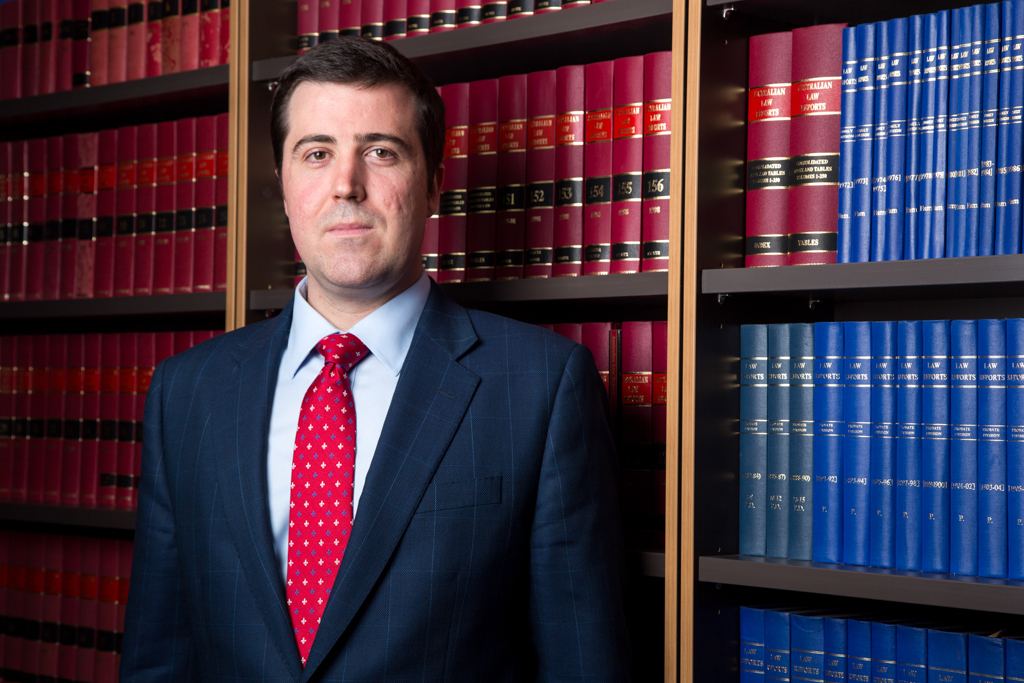
Alex Katsikalis in chambers
2011At the Bar since
QLD · NSW · VICPractice across three states
High Courtand Court of Appeal experience
About

Complex matters, carefully run.

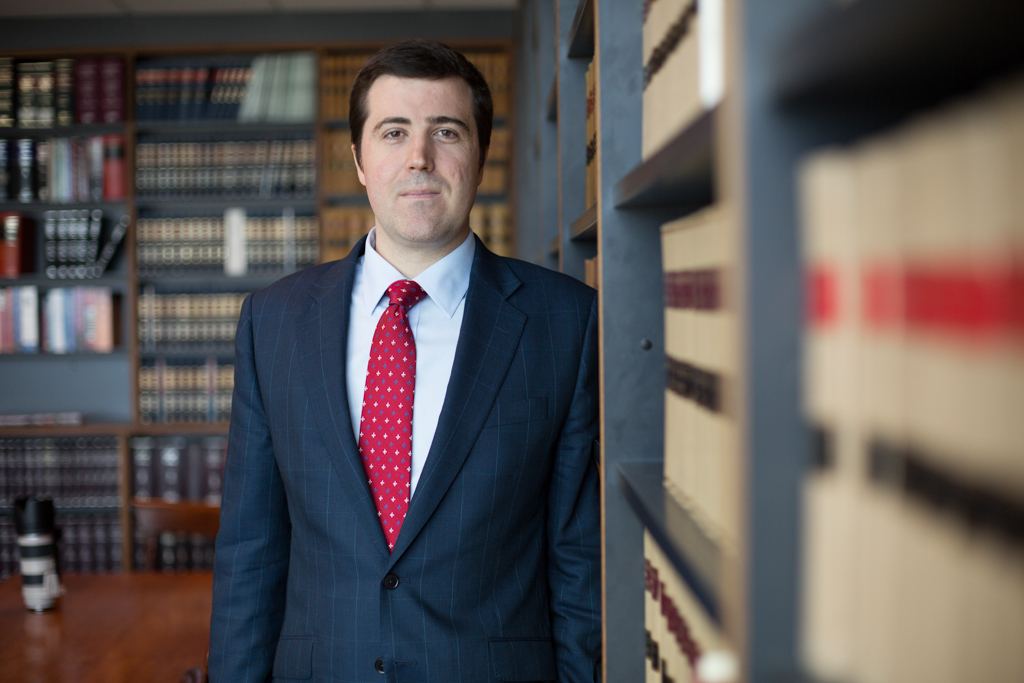
Alex Katsikalis in the library

A Brisbane barrister whose practice centres on insurance and medical negligence, acting for plaintiffs and defendants alike.

Alex has practised at the Bar since 2011 and now appears regularly in Queensland, New South Wales and Victoria. He has acted in hundreds of personal injury and medical negligence matters, many resolving in multimillion-dollar outcomes.

His practice also extends to banking and finance, trusts and superannuation, property and criminal appeals, with appearances in the Court of Appeal of Queensland and the High Court of Australia.

Areas of practice

Practice areas

01

Medical Negligence

Misdiagnosis, surgical and anaesthetic error, birth injury and maternal trauma claims.

02

Personal Injuries & Health Law

Motor vehicle, workplace and public liability claims for plaintiffs and insurers.

03

Appellate

Civil and criminal appeals in the Court of Appeal and the High Court of Australia.

04

Commercial Law

Banking and finance, guarantees, multi-party contractual disputes.

05

Civil Litigation

Trusts, superannuation, property and compulsory acquisition matters.

→

Discuss a matter

Call or email to check availability.

Selected experience

A record across the courts

Court of Appeal · 2015

Mules v Ferguson [2015] QCA 5

Appeal allowed against the dismissal of a claim that a general practitioner failed to examine and refer a patient later diagnosed with cryptococcal meningitis. Judgment entered for damages of about $6.7 million plus interest, and the peer professional opinion defence under s 22 of the Civil Liability Act 2003 (Qld) held not established.

Issues and reasoning
  • Overturning a dismissal after an 11-day trial in which the trial judge had largely preferred the defendant's account of the consultations
  • Showing that the causal effect of two breaches had to be assessed together, not one at a time
  • Defeating the s 22 peer professional opinion defence because the GP experts had assumed facts the trial judge did not find
  • Preserving the trial judge's favourable alternative findings on causation, so judgment could be entered without a retrial

"there was no evidence upon which the trial judge could be satisfied the respondent had discharged her onus under s 22 of the Act"

[201], Boddice J

With S Doyle QC and R Lynch, for the appellant. Also at trial: [2014] QSC 51.

High Court & Court of Appeal · 2019–2020

Queensland v Masson [2020] HCA 28; [2019] QCA 80

Acted for the estate of a patient who suffered hypoxic brain injury after ambulance officers treated a severe asthma attack with salbutamol rather than adrenaline. The Court of Appeal unanimously held the paramedic negligent. The High Court allowed the State's appeal, considering the standard of care of intensive care paramedics, the role of a clinical practice manual and responsible bodies of medical opinion.

Issues and reasoning
  • Reconstructing pre-hospital treatment decisions made over 20 minutes in 2002, from records, witness statements and expert evidence
  • Construing the ambulance service's clinical practice manual and its "consider adrenaline" flowchart
  • Competing bodies of specialist opinion on salbutamol and adrenaline, and whether a paramedic may rely on them
  • Appellate review of a trial judge's findings on what the paramedic actually considered

With B W Walker SC and D R Campbell SC in the High Court, and D Campbell SC in the Court of Appeal, for the estate.

Supreme Court · 2019

Walker v Tucker [2019] QSC 141

Limitation period extended in a claim against a general practitioner, on the basis that an expert's changed opinion on breach was a material fact of a decisive character.

Issues and reasoning
  • Proving that an expert's changed opinion, years after an earlier favourable report, was a new material fact
  • Showing the applicant took all reasonable steps, so the fact was outside his means of knowledge
  • Establishing a prima facie case on breach and causation, and that a fair trial was still possible despite the delay

With M E Eliadis, for the applicant.

Settlements

Birth injury and misdiagnosis

A child cerebral palsy claim settled for more than $12,000,000, and multimillion-dollar settlements in claims for misdiagnosis of spinal abscess, sepsis, pulmonary embolism, endocarditis, meningitis and cancer.

Reported decisions

The issues behind the cases

Every reported decision, with the legal questions argued at trial and on appeal. Citations link to the published judgments.

Case notes

Points of practice

Short notes on principles from reported decisions in which Alex appeared. They are general information, not legal advice. Paragraph numbers refer to the judgment.

Medical negligence

Proving the peer professional opinion defence

Mules v Ferguson [2015] QCA 5

Read the note
  • The defence in s 22 of the Civil Liability Act 2003 (Qld) is for the defendant to prove. It requires identifying the particular conduct, and a body of peer opinion that accepts that conduct as widely accepted practice ([191]).
  • The conduct is judged against the facts as the court finds them. In Mules, the GP experts had assumed the defendant's account of the consultations. Once the trial judge found the facts differently, their opinions could not discharge the onus ([193]–[201]).
  • Section 22(5) did not exclude the defence for a failure to examine and refer. The Court read it as confined to failures to warn or advise ([202]–[205]).
  • Where there is more than one breach, their causal effect is assessed together, not one at a time ([188]).

In practice: Test each expert report against the factual findings the court might make, not only your client's version.

Medical negligence

Paramedics, practice manuals and responsible opinion

Queensland v Masson [2020] HCA 28

Alex appeared for the respondent estate. The State's appeal was allowed.

Read the note
  • The standard is that of the ordinary skilled intensive care paramedic operating in the field in circumstances of urgency, which is less exacting than the standard expected of specialists in emergency medicine ([10]).
  • A clinical practice manual does not of itself fix the range of reasonable responses. An instruction to "consider" a drug calls for a clinical judgment weighing its benefits and adverse effects ([11], [34], [73]). Manuals are not to be construed like a statute ([79], [95]).
  • A decision supported by a responsible body of opinion is not negligent merely because most specialists would have chosen differently ([133]–[134], [137]).
  • Findings based on a trial judge's assessment of oral evidence should not be overturned unless they are contrary to compelling inferences or glaringly improbable. Witness statements prepared by lawyers are a doubtful basis for displacing that evidence ([74]–[78], [112], [119]).

In practice: In guideline cases, build the case on what the clinician actually considered at the time, tested in oral evidence, rather than on the wording of the guideline alone.

Limitations

When a changed expert opinion is a decisive material fact

Walker v Tucker [2019] QSC 141

Read the note
  • An expert's changed opinion that a defendant was negligent can be a material fact of a decisive character under s 31 of the Limitation of Actions Act 1974 (Qld), where the applicant had earlier been given a contrary opinion ([43]–[44], [69]).
  • Whether a report would satisfy the Personal Injuries Proceedings Act 2002 (Qld) is a different question, and not the test under s 31 ([71]).
  • Prejudice to a defendant who had been told he would not be sued, and who then gave a statement, was not enough in that case to prevent a fair trial ([95]–[100]).

In practice: When an expert is re-briefed with new material, keep a clear record of when the client first learned of any change in opinion.

Public liability

Defining the risk: when is it obvious?

Kelly v State of Queensland [2013] QSC 106; affirmed [2014] QCA 27

Read the note
  • Whether a risk is obvious under s 13 of the Civil Liability Act 2003 (Qld) depends on how the risk is defined. The risk that sand would give way and turn a feet-first run into a head-first entry into shallow water was not obvious but "a trap for the unwary" ([64]–[65], [67], [69]).
  • Because the risk was not obvious, neither s 15 (no duty to warn of an obvious risk) nor s 19 (dangerous recreational activity) applied ([72]).
  • Breach was found in the failure to adapt a compulsory visitor video to warn about running down the dunes, and in the wording of the signs. Fencing, prohibition and a ranger were not reasonably practicable ([109]–[122], [144]–[145]).
  • Causation was established for the video, which the plaintiff watched and would have heeded, but not for the signs. The State's case for 100% contributory negligence was rejected and 15% assessed ([149]–[159], [165]–[175]).

In practice: Frame the risk precisely, and tie each alleged warning failure to evidence that the plaintiff would have seen and acted on a better warning.

Capacity

Capacity is decision-specific

Adamson v Enever [2021] QSC 221

Read the note
  • Capacity is assessed for a particular matter, which must be defined with some precision, rather than as general "legal or financial capacity" ([6]–[9]).
  • A person does not have impaired capacity if they can make the decision with adequate and appropriate support ([30]).
  • An expected future decline is not a reason to find present incapacity in order to protect the person later ([70]).
  • If no sanction is required, the power to appoint an administrator on sanction is not engaged ([19]).

In practice: Before seeking sanction and administration, consider whether supports can be put in place that allow the client to manage the settlement.

Banking

Guarantees, cancelled facilities and the documents

Lee v Australia and New Zealand Banking Group Ltd [2013] QCA 236

Read the note
  • A guarantee permitting release on "paying ANZ the amount guaranteed" meant payment by the guarantor, not a temporary credit balance created by the borrower ([29]).
  • Under the facility conditions, a customer's written notice together with repayment cancelled the overdraft immediately. The bank had no discretion to keep it open ([36]–[37]).
  • The trial judge's advantage in seeing the witnesses was limited where one gave evidence through an interpreter and another with difficulty in English. The documents and payments gave compelling proof of what was agreed ([65]–[69]).
  • There was no election where, between the guarantor and the bank, there was "but one true position". Not joining the bank in earlier District Court proceedings did not give rise to an Anshun estoppel ([77], [79]–[84]).

In practice: In guarantee disputes, the contemporaneous instructions and payment records can outweigh a bank officer's recollection on appeal.

$20m+

Settlement for a plaintiff in a motor vehicle accident claim.

$12m+

Settlement in a child cerebral palsy birth injury claim.

$6.7m

Judgment on appeal in Mules v Ferguson [2015] QCA 5.

Courts & jurisdictions

Appearances

Contact

Briefs and enquiries

Solicitors are welcome to call or email to discuss availability, fees or a new matter.

  1. Directly. Call or email to check availability and fees, then send the brief by email.
  2. Through the clerk. Barry Klopper, the clerk at Hemmant's List, can check availability and fees, and takes briefing requests online.
  3. Direct access. In-house counsel may brief directly, for example for pre-litigation advice, some mediations and less complex appearances.
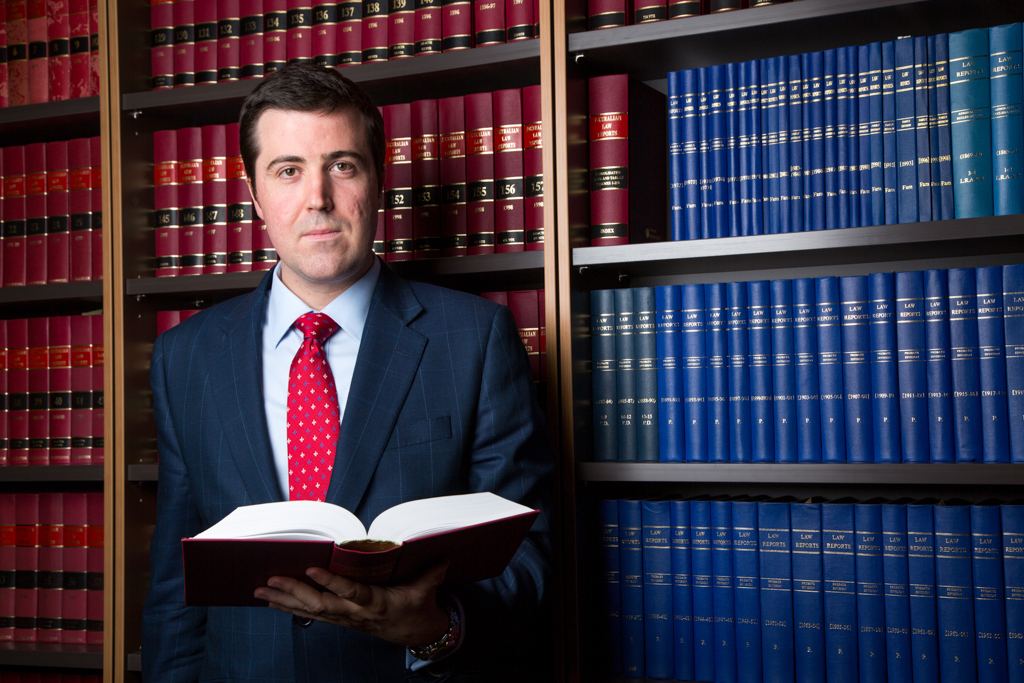
Alex Katsikalis holding a law report
AddressLevel 6, Santos Place
32 Turbot Street, Brisbane QLD 4000
ClerkBarry Klopper
Clerk phone(07) 3505 3969
Save contact